
Creatine Benefits: Brain Health, Women, Muscle & Fertility (2026 Guide)
For decades, creatine was stamped as a supplement for bodybuilders and gym enthusiasts. Groundbreaking research from leading neuroscientists like Dr. Andrew Huberman and Dr. Louisa Nicola is revealing a different story: creatine isn't just about bigger muscles: it's about a sharper brain, better mood, and longevity.
Women, in particular, have 70-80% lower creatine stores than men, making supplementation potentially even more critical. Whether you're 25 or 65, creatine monohydrate may be the most affordable, well researched supplement you're not taking.
In this comprehensive guide, we'll explore the science behind creatine's impact on your brain, muscles, and overall health with expert insights from the world's leading researchers.
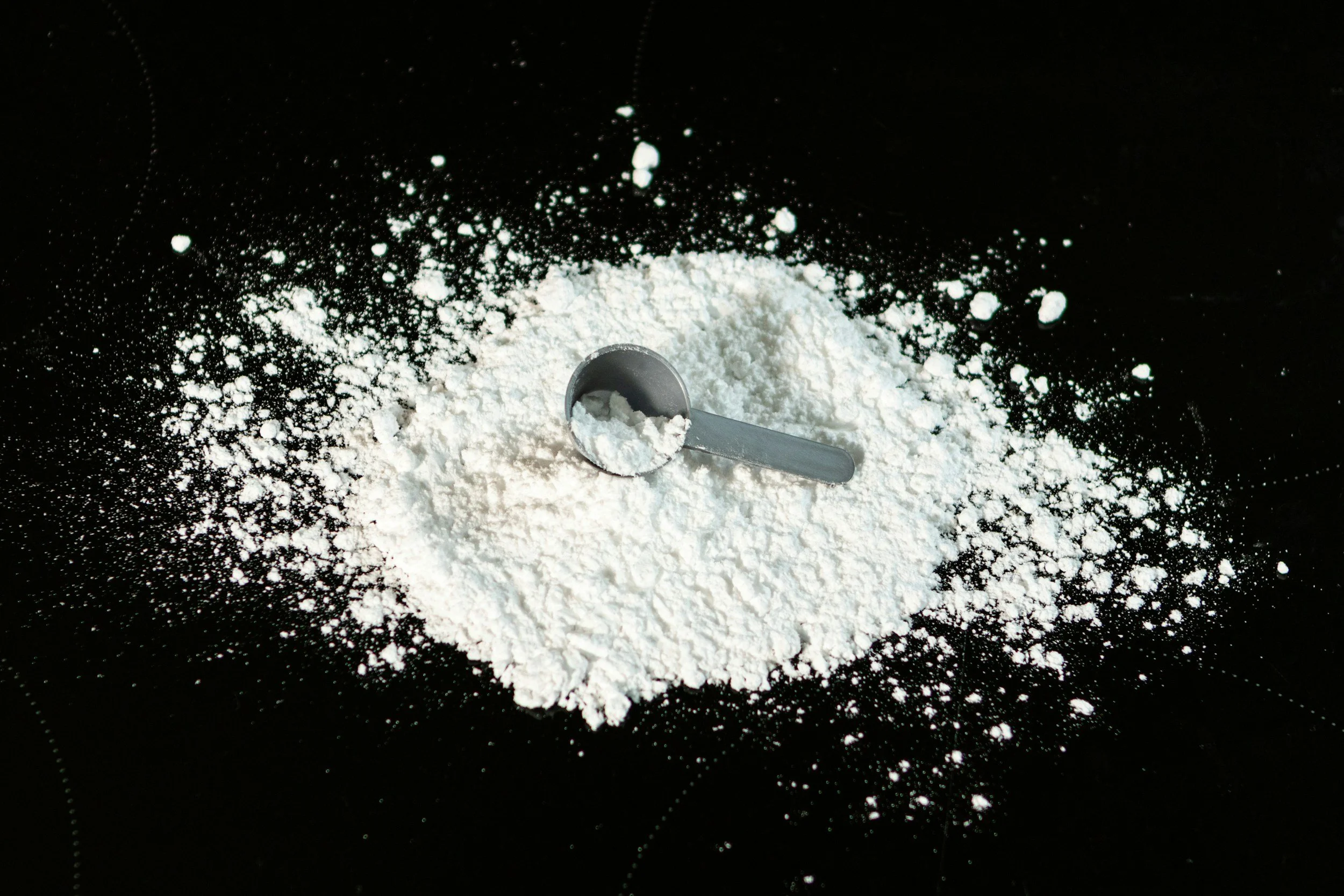
Creatine & The Brain: Your Most Powerful Cognitive Fuel
Your brain is an energy hungry organ, consuming 20% of your body's total energy despite being only 2% of your body weight. Dr. Andrew Huberman, Stanford neuroscientist and host of the Huberman Lab podcast, explains that creatine acts as a fuel source for neurons, particularly in the prefrontal cortex (the brain region responsible for planning, decision-making, and emotional regulation.)
"Creatine can enhance the function of certain frontal cortical circuits that connect to areas of the brain involved in mood regulation and motivation," Huberman explains.
The science is compelling. Your brain stores creatine as phosphocreatine to rapidly regenerate ATP (adenosine triphosphate), which is your cells energy currency. Research shows that brain creatine levels improve:
Mental clarity during sleep deprivation;
Performance under stress;
Attention and concentration;
Short-term memory.
The Dosage Debate: 5g vs. 10g for Brain Health
Dr. Louisa Nicola, neurophysiologist and founder of Neuro Athletics, recently admitted she was "wrong" about creatine dosing. For years, she recommended 5 grams daily (the standard dose for muscle saturation) but new research from Germany changed her perspective.
"At 10 grams daily, participant’s brain creatine content doubled compared to lower doses," Nicola explains. "This higher dose enhanced creatine levels significantly in critical brain areas like the gray matter, white matter, and thalamus regions deeply involved in memory, cognition, and overall brain performance."
Huberman's dosing recommendation aligns: for individuals weighing 84 - 114kg, he suggests 10-15 grams daily for both muscle and cognitive benefits. Lighter individuals (under 84kgs) can benefit from 5 grams.
Nicola's personal protocol: 10 grams daily baseline, increased to 20 grams during acute stressors like international travel or intense work periods.
Creatine & Depression: A Natural SSRI Alternative?
One of the most exciting areas of creatine research involves mood disorders. A 2016 study by Yoon et al. found that women with major depressive disorder who supplemented with 5 grams of creatine daily alongside their antidepressant medication showed significantly better improvement than those taking medication alone.
The research revealed:
Increased prefrontal N-acetylaspartate (NAA), indicating improved neuronal viability;
Enhanced "rich-club" networks: highly connected brain regions critical for efficient brain communication;
A 2021 study found that people experiencing depression had lower levels of creatine in their prefrontal cortex, suggesting that low brain creatine may contribute to mood disorders. This is naturally something to discuss with your prescribing doctor but we encourage individuals to take the research with them and see what they suggest.
Traumatic Brain Injury & Headache Relief
Huberman highlights creatine's therapeutic potential for traumatic brain injury (TBI). A pilot study examined creatine dosages for individuals with TBI, finding significant benefits at higher dosages approximately 0.4 grams per kilogram of body weight.
For a 100 kg (220 lbs) individual, this equals 40 grams per day during recovery periods.
Research shows creatine can:
Reduce headache intensity and frequency (particularly post-TBI headaches);
Decrease dizziness and fatigue;
Support cognitive function recovery;
Protect against brain metabolism reduction after concussions.
Creatine & Muscle: Your Body's Longevity Organ
Your muscles don't run on willpower, they run on ATP. But here's the problem: your muscles only store enough ATP for about 10 seconds of maximal effort. After that, they need to regenerate it fast.
Enter creatine.
Stored as phosphocreatine in your muscles, creatine acts as a rapid energy reserve. When ATP gets used up, phosphocreatine donates its phosphate group to regenerate ATP almost instantly, extending your muscles' ability to produce energy when you need it most.
Here's what most people get wrong: creatine doesn't directly build muscle tissue.
What it does is make you stronger and able to train harder, which THEN builds muscle.
The research shows:
5-15% increase in strength within 4-12 weeks
Improved performance in high-intensity, short-duration activities (sprinting, jumping, weightlifting)
More reps, heavier weight, better training quality
Dr. Andy Galpin, exercise physiologist , explains that creatine increases phosphocreatine content in muscles, boosting power output by 1-20% and reducing fatigue.
The Recovery Advantage No One Talks About
Creatine supports muscle recovery in four critical ways:
Reduces muscle damage: Studies show creatine supplementation reduces markers of muscle damage and inflammation after intense training;
Speeds ATP restoration: Helps restore phosphocreatine levels faster between sessions;
Decreases muscle soreness: Reduces delayed-onset muscle soreness, particularly after eccentric exercise;
Supports muscle repair: Enhances satellite cell activity, the cells responsible for repairing and building muscle tissue.
Creatine for Women: Why Females Need It More
Women have 70-80% lower creatine stores than men, particularly those eating less meat and fish. Research from 2016 and 2021 reveals how women's creatine needs shift across life stages: from menstruation and pregnancy to menopause.

Why? Estrogen and progesterone directly influence creatine synthesis, storage, and utilization. Your hormones change, so your creatine needs change too.
Dr. Stacy Sims, exercise physiologist specializing in women's health, highlights creatine as the number one supplement for women, regardless of age. "Studies are showing benefits for the brain, mood, and even gut health," Sims explains.
New research shows creatine offers unique benefits for women, especially during hormonal transitions by enhancing ATP production, creatine buffers against hormonal shifts and metabolic stress.
Brain Energy & Mood:
Improves mental clarity;
Stabilizes mood swings;
Increases emotional resilience;
Supports neurotransmitter balance during the luteal phase and perimenopause.
Creatine & Fertility: The Link You Haven't Heard About
The 2017-2020 National Health & Nutrition Examination Survey found that women who consumed ≥13 mg of creatine per kg body mass per day had better reproductive health outcomes and a lower risk of reproductive disorders.
Women eating animal-based protein and supplementing with 5-10g daily had significantly improved fertility markers.
Quality, dosing and timing: does it matter?
Firstly, the quality of your creatine does matter. Gold standard is a brand called Creapure, then crevitalis and finally pure creatine monohydrate (make sure there are no fillers, additives or sugars). Once you have this right, we can look at dosing. Standard Dosing:Under 180 lbs/ 80 kg: 5g daily
180-250 lbs/ 80- 110kg: 5-10g daily
Over 250 lbs/ Over 115kg: 10-15g daily
Brain-Focused Dosing (Louisa Nicola's Protocol):Baseline: 10g daily
Acute stress periods: 20g daily temporarily
Timing doesn’t matter nearly as much as consistency does. Creatine works through saturation, not acute timing. Your muscles store creatine as phosphocreatine, and you need to maintain those stores consistently. When timing might help is post workout but its a slight edge. A 2013 study in the Journal of the International Society of Sports Nutrition found that post-workout creatine supplementation resulted in slightly better gains in lean muscle mass and strength compared to pre-workout. The difference was marginal but measurable
The bottom line
Creatine isn't about aesthetics or gym performance alone. Think of it less as a performance enhancer and more as a supplement to support longevity, for both your brain and your body.
As Dr. Huberman puts it: "Creatine is essentially a baseline insurance policy for brain and muscle health."
Whether you're a 35-year-old woman navigating hormonal changes, a 50-year-old protecting against muscle loss, or anyone wanting sharper cognition and better mood, creatine deserves a spot in your daily routine.
Be well,
Dr Enya